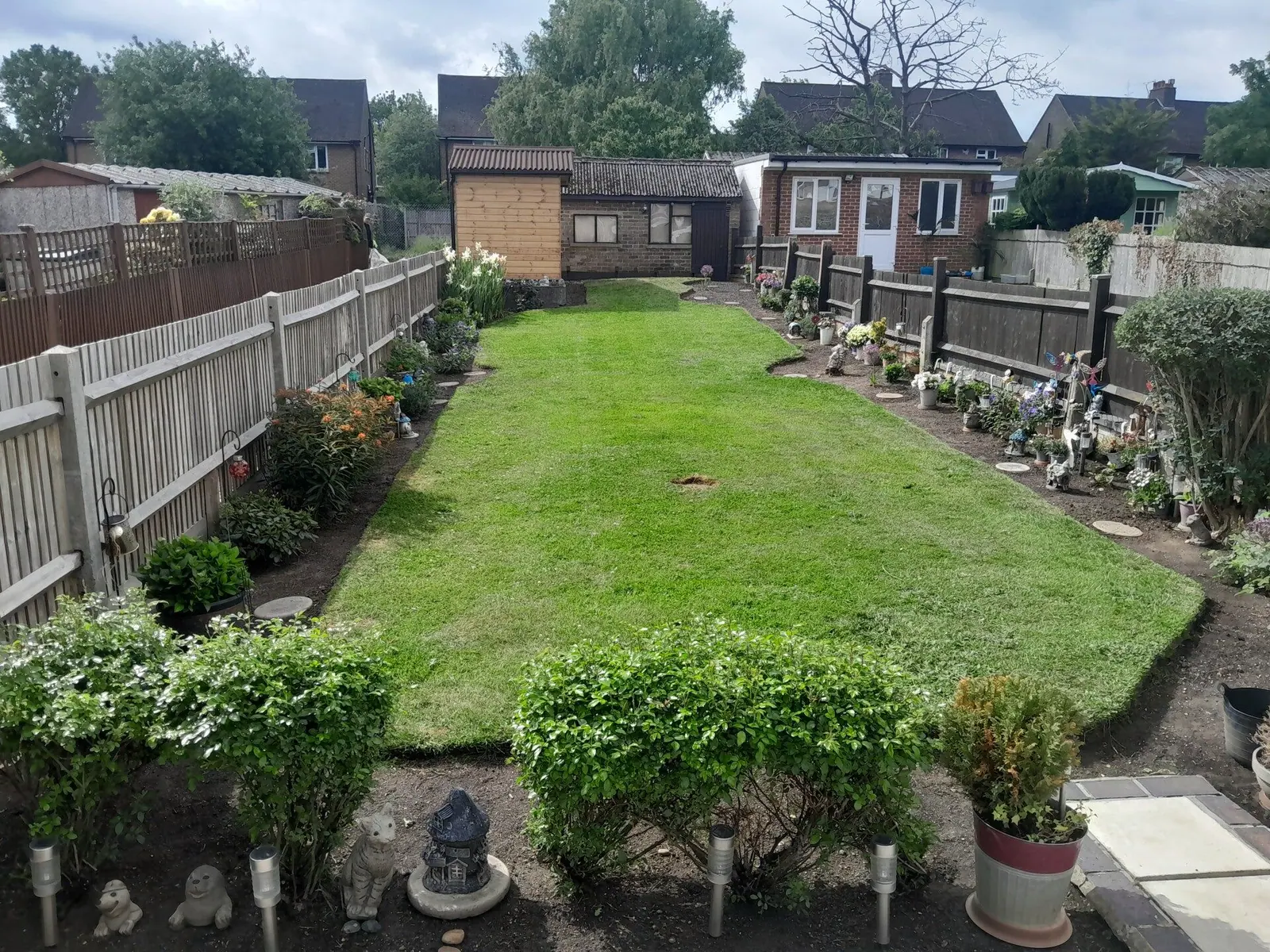
Why West London lawns struggle
Much of Ealing, Acton, Chiswick and the land along the Brent sits on London clay. It holds water through winter, which brings moss and bare patches, then bakes hard in a dry July, which stresses the grass. The answer is not more mowing; it is a few well-timed jobs each year that open the soil up and keep the grass thick enough to crowd out weeds and moss.
March and April
First cut on a high setting once the grass starts growing. Treat moss, then scarify two weeks later to rake out the dead moss and thatch. Aerate compacted areas with a hollow-tine fork, top-dress with sharp sand and compost, and over-seed thin patches. Apply a spring feed at the end of April.
May to August
Mow weekly or fortnightly, never taking more than a third off at once, and raise the blades in hot, dry spells. Water new seed and turf; established lawns are better left to go a little brown than watered lightly every day. Spot-treat weeds by hand or with a selective lawn weedkiller.
September and October
The most important months. Scarify again if the lawn is thatchy, aerate, over-seed and apply an autumn feed that is high in potassium rather than nitrogen. This is also the best time to lay new turf. Keep leaves off the grass through October and November.
November to February
Mow only if the grass is still growing and the ground is dry. Keep off the lawn when it is frosted or waterlogged, clear leaves, and book the spring renovation. If the lawn is more moss than grass by February, that is the time to decide whether to renovate or re-turf.
What we charge
Lawn cutting and treatment is from £35 per hour. Scarifying, aeration, feeding and over-seeding are usually done as a spring and an autumn visit, and we quote new turf per lawn after a free visit.